


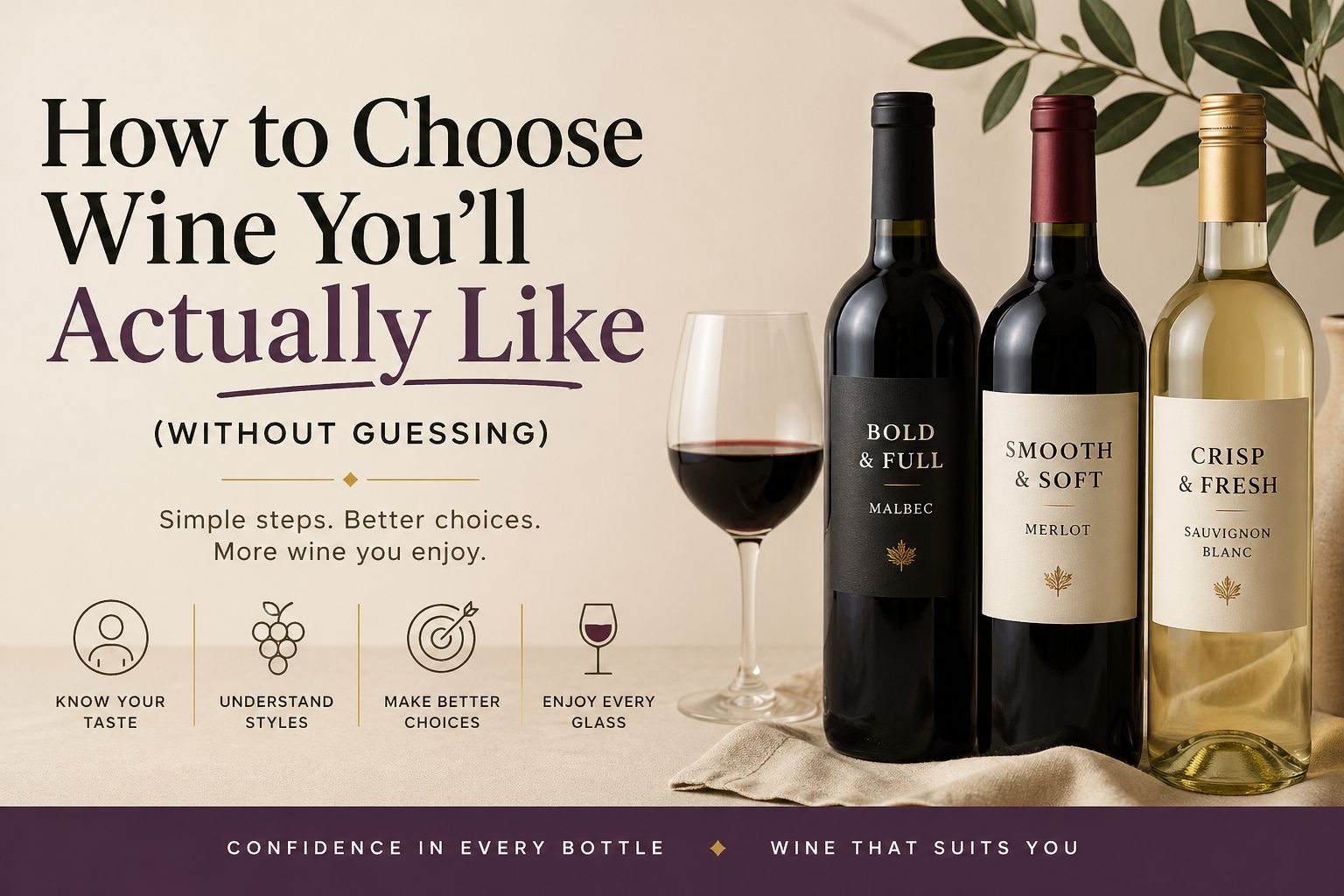
Most people don’t struggle with wine because there’s too much choice.
They struggle because every bottle feels like a gamble.
You stand there, look at a wall of labels, pick something based on price or design, and hope for the best. Sometimes it works. Most of the time, it doesn’t.
The good news is this: choosing wine isn’t complicated once you understand what you’re actually looking for.
The wine world has a habit of overcomplicating things.
You’ll see:
Most advice focuses on what makes a wine technically good, not what makes it enjoyable for you.
That’s the gap this guide fixes.
If you’ve ever felt like you’re just guessing, you’re not alone—most people are choosing wine the wrong way.
Before you think about wine, think about your general taste preferences.
Do you usually prefer:
This matters more than anything printed on a label.
Wine follows the same patterns as everything else you drink.
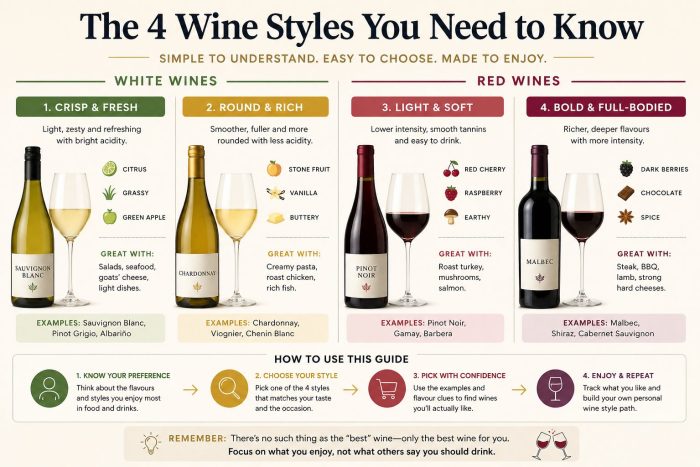
You don’t need to memorise hundreds of grape varieties. Most wines sit within four simple style categories.
White Wines
Crisp & Fresh
Light, zesty, and refreshing.Examples include Sauvignon Blanc and Pinot Grigio.
If you like clean, sharp drinks, start here.
Round & Rich
Smoother, fuller, with more body.Chardonnay is the most common example.
If you prefer something softer and less acidic, this is your lane.
Red Wines
Light & Soft
Lower intensity, easy drinking.Pinot Noir is the classic example.
Good if you don’t want anything too heavy.
Bold & Full-Bodied
Richer, deeper, more intense.Malbec, Shiraz, and Cabernet Sauvignon sit here.
If you enjoy stronger flavours, this is where to look.
Most people already have a preference—they just haven’t defined it.
A simple way to figure it out:
Once you know this, you’ve removed most of the guesswork.
If you’re still unsure how to apply this in real situations, like hosting or visiting friends, this guide on what wine to bring to a dinner party breaks it down simply.
One of the biggest misconceptions in wine is that price determines enjoyment.
It doesn’t.
Price usually reflects:
Not whether you’ll actually like it.
There’s a huge amount of excellent wine in the £7–£12 range that most people overlook.
If you’re looking for a safe place to start, you can browse easy-drinking wines that fit these styles and see what naturally appeals to you.
This is where people either improve quickly or stay stuck.
Most buyers reset every time:
New bottle → new guess → new disappointment
Instead, do this:
For example:
You’re building a pattern, not gambling every time.
This is exactly why so many people feel stuck—they reset every time they buy a bottle instead of building a system that works.
Most bad wine choices come from a few predictable habits:
If that sounds familiar, it’s usually because the way most people are taught to choose wine doesn’t actually help them.
Choosing based on the label
Nice design doesn’t mean it suits your taste.
Buying purely on price
More expensive doesn’t mean more enjoyable.
Trying something “different” without context
Experimenting is fine—but not when you don’t know your baseline.
Ignoring what you liked before
If you don’t track patterns, you stay stuck guessing.
If you want a quick way to choose wine without overthinking:
It’s not perfect—but it’s reliable.
Once you understand your preferences, you can adjust slightly depending on the moment.
You don’t need to reinvent your choices every time.
And once you’ve opened a bottle, it’s worth knowing how long wine actually lasts after opening, so you’re not wasting good wine.
If you’re still figuring out your preferences, start simple. Choose a style that sounds closest to what you already enjoy, and build from there.
Or, if you’d rather skip the guesswork, you can explore our most popular wines that customers come back to again and again.
There aren’t really “good” or “bad” wines in everyday drinking.
There’s only:
Once you focus on that, everything becomes easier.
Choosing wine isn’t about knowledge.
It’s about narrowing your options until they match what you already enjoy.
Do that, and you stop guessing.
And once you stop guessing, you start getting it right—consistently.
Or, if you’re still figuring it out, start simple and build from there.
That’s how confidence with wine actually develops.





We’re always on the phone, emails and social media ready to take your questions, orders or offer advice and services whenever you need it.
8:30am - 7pm open 7 days a week, inc bank holidays.







 North West
 Email
Email